Not sure where to go next in your career, getting ready for a job search, or wanting to enhance your performance or job satisfaction?

Career in it’s broader sense includes all those roles we play in life – which may include a work paid role, a role as spouse, parent, family member, student, athlete, volunteer, community member, etc.
There are many points in our work-life career when we get stuck, and need some help to be able to move forward to create a more satisfying life for ourselves. While the context of the problem that you are stuck in may relate to your work-paid role, solving the problem can occur in the context of any of your work-life roles.
Career coaching is way for you to talk with someone about whatever work-life matters that concern you, to help understand what you want in your career and the actions you could take to get there. Coaching conversations are solution focussed and utilise tools and concepts as relevant to your circumstances.
Coaching sessions can focus on any or all of these three areas:
1. Dealing with change
Transition – Stress – Coping
Adults in transition can experience heightened levels of stress and tension. Managing your response to change is key in ensuring a successful career transition.
2. Working it out
Reflect – Explore – Validate – Plan
People are different in their interests, skills, values, personalities, needs and desires. Figuring out these preferences in terms of possible career pathways, is more likely to lead to career satisfaction.
3. Making the transition happen
Search strategies (networking/job boards/recruiters) – Application support (resume/LinkedIn/cover letter) – Interviewing – Transition
You may be in job search because you have a clear idea of what you want or are still working it out. No matter the scenario, the process is well defined, and support available for all stages.


Some key coaching concepts can also be useful for those individuals and teams seeking support to enhance their wellbeing and performance. Some concepts and tools include:
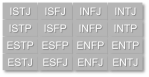 Personality Type (MBTI) – for individuals and teams seeking to gain an understanding of their preferences and differences, particularly with respect to energy source, information gathering, decision-making and lifestyle/work patterns – with the aim of enhancing team or individual effectiveness. Numerous topics are available that reflect the exploration of a different aspect of Type.
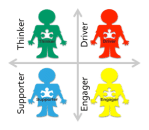 Behaviour Styles – for individuals and teams seeking to improve their communication and workplace relationships. The Behaviour Styles model reflects the interplay of various continuums, the combination of which reflects a person’s particular behaviour style. The model provides a pragmatic way of understanding differences between people, and how that impacts on our ability to communicate effectively.
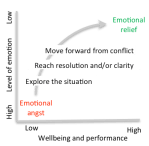 Conflict Management – for leaders and teams seeking to improve skills in understanding conflict and how to help others engage in forthright, authentic and respectful conversations.
Irrespective of the area of focus, career coaching sessions follow a typical pattern of understanding the current context, setting goals, building solution options, deciding on how to address barriers and action planning.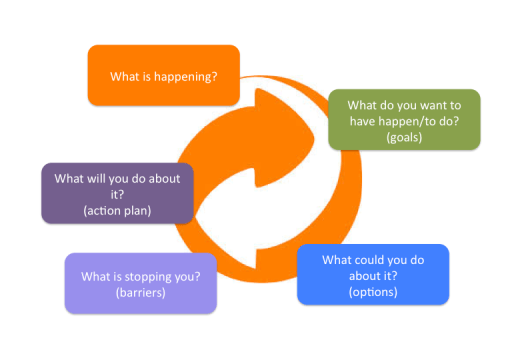

 Rebecca Jennings